Reworked The Anatomy Lesson painting
Dr. DeathThe Reworked The Anatomy Lesson painting is an unsigned, deliberately altered version of Rembrandt’s The Anatomy Lesson: it casts the murdered Eldon Mate in the double role of dissected cadaver and dispassionate dissector. Left anonymously at a Santa Monica gallery, the work drew police attention because details in its composition reportedly echoed the crime scene, making the image both a provocation and a possible clue to Mate’s killer.
Discovery and Public Mystery
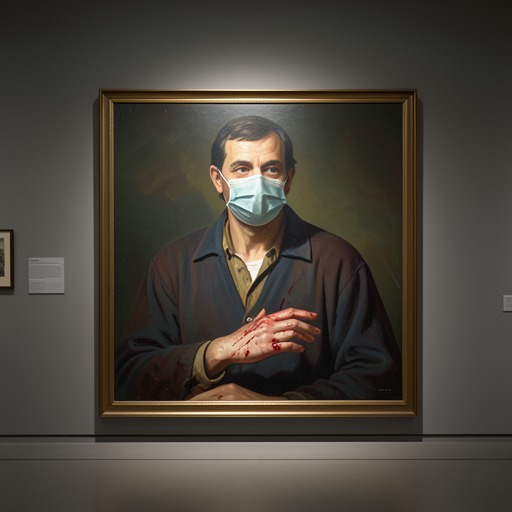
The painting surfaced when Grant Kugler, owner of the Primal Images gallery on Colorado Avenue, arrived to unpack an installation. The previous night, someone had propped a brown-paper-wrapped package against the gallery’s rear door. Inside was an original oil painting, unsigned and described as a copy of Rembrandt’s The Anatomy Lesson, but altered so that Mate appeared as both the body on the table and the figure conducting the dissection.
Kugler judged the painting competent rather than masterful and said he could not explain why it had been left at his door. His uncertainty was echoed by the newspaper coverage: its front-page account reported that police sources saw intriguing similarities between the painting and details of the murder scene, while leaving the artist’s identity and reason for abandoning it unresolved. The picture had been taken into police custody. The report brought the image into the investigation as an object whose anonymous arrival raised questions without answering them; its double portrait of Mate made the murder itself the subject of a staged, unsettling reconstruction.
Appearance and Interpretation
When Alex Delaware and Milo Sturgis examined the canvas in the Robbery-Homicide room at West L.A., its modest scale contrasted with the violence it made impossible to overlook: the painting measured only twenty-four by eighteen inches. Its palette stayed within browns and blacks, with muted light and a slight wash of pink at the left arm, where the flesh had been reduced to tendons and ligaments. The dead figure had Eldon Mate’s soft, fussy face; another Mate stood over him as dissector, dressed in a black robe, white lace collar, and tall black hat, and probing the torn arm with a scalpel. Around the table, seven elaborately robed, ruffed, and goateed men watched with academic detachment.
The painting’s roughness sharpened rather than softened its subject. Where Rembrandt’s artistry could distract from the cruelty of the dissection, Zero Tollrance’s competent but unpolished imitation made that cruelty more conspicuous: angry, swirling brushstrokes and thick impasto rose in sharp peaks from the canvas. The image therefore worked as more than a likeness or a copy. By giving Mate both the dissected body and the detached authority of the dissector, it turned the murder into an image of divided identification, while the watching men lent the violence the air of a public demonstration.
That expressive force did not make the painting an easy forensic answer. Milo noted that it bore no fingerprints and considered the possibility of a careful, disturbed artist; the image itself suggested rage toward Mate, but also ambivalence. Alex regarded those emotional directions as apparent rather than explanatory: the painting could make hostility and conflicted attachment legible without identifying its maker or establishing why the portrait had been left at the gallery.
Evidentiary Limits
The painting’s investigative value rests on a distinction between resemblance and proof. Its reported parallels with the murder scene justified police interest, but the available account does not identify the artist or establish a reason for leaving the canvas at the gallery. The work could therefore sharpen the questions surrounding Mate’s murder without resolving them: as an unsigned image held by police, it remained evidence of an unknown person’s intervention, not a disclosed answer about who killed him.
The Painting as a Case File
The newspaper gave the discovery a sensational frame, calling its front-page report “The Mysterious Portrait of Dr. Death.” For Alex Delaware, the announcement briefly conjured the absurd image of officers trying to handcuff a picture frame; the joke also marks the painting’s awkward passage from gallery donation to police property. An image made to imitate a famous dissection had become an item to be secured and examined, while its unsigned arrival kept its maker outside the frame of the investigation.
The report’s unresolved questions brought the canvas into the case before anyone could say what it meant. When Milo Sturgis telephoned after Delaware had read the story, their attention turned from the headline to the painting itself. Its presence could prompt scrutiny, but neither the news account nor the image supplied a name for the artist or a settled explanation for the gesture. The painting thus remains a conspicuous intervention in the investigation: it directs attention back to Eldon Mate’s murder while withholding the identity and purpose that would make that attention conclusive.